
Custom vs ready-made furniture: which fits your villa?
Published by Chaingkiat & Furniture — Nearly 30 years of hands-on carpentry, with our own workshop and crew on Koh Samui. · · 5 min read
Almost every comparison of custom and ready-made furniture is written by someone selling one of the two. We sit on both sides: we build made-to-order furniture in our own workshop, and we also assemble and install ready-made pieces — so we have no stake in which you choose, only in whether it survives here.
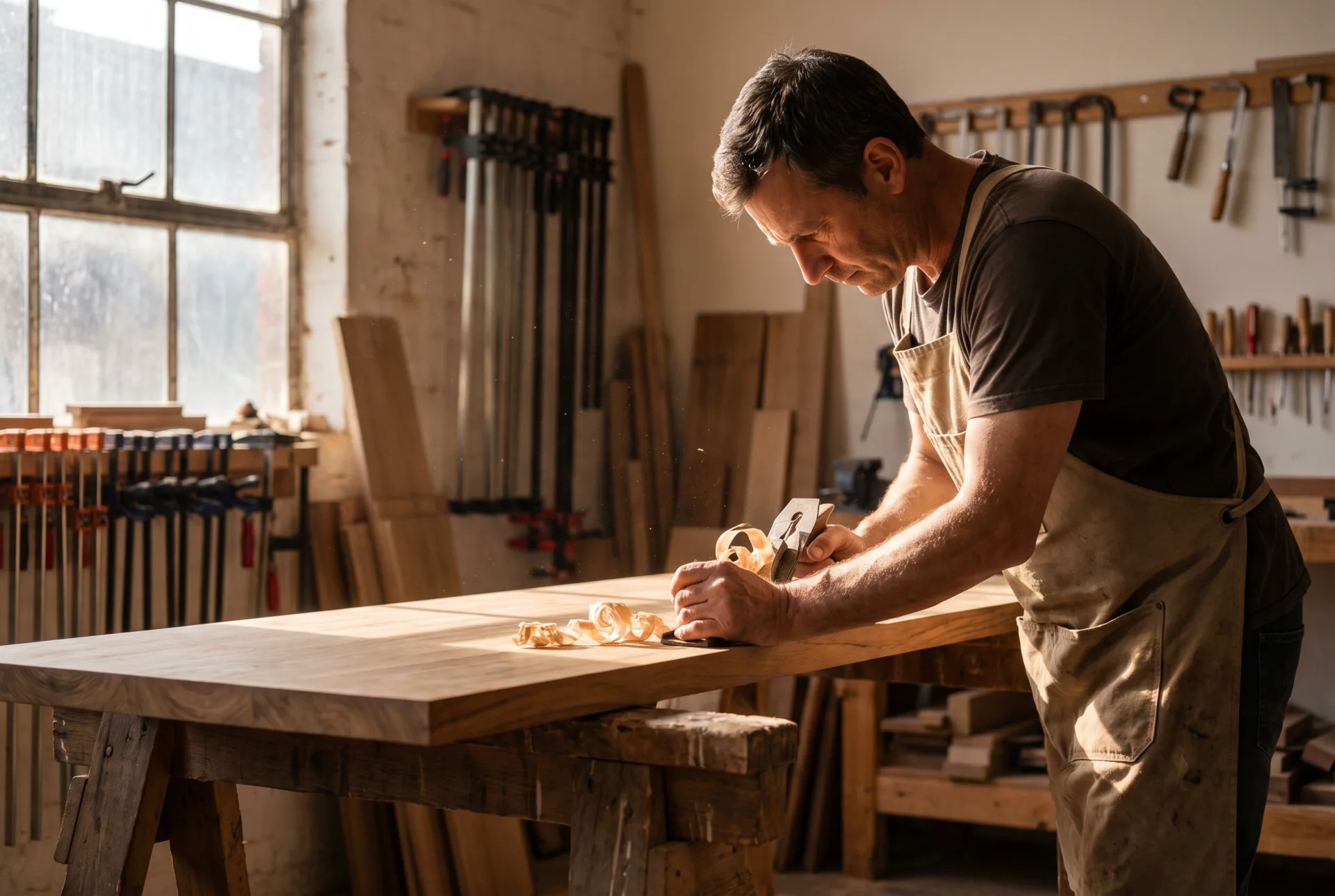
The honest answer is that most villas should have both. What follows is the trade-off as it actually plays out on an island — without prices, which vary too much with size, material and finish to print, and without pretending either option is always right.
Fit is the real dividing line
Forget the binary and sort furniture by its relationship to the building. Loose, freestanding pieces — dining chairs, occasional tables, standard-size beds — stand on their own feet in the middle of a room, and ready-made serves them well. Custom earns its keep where a piece must relate to walls, alcoves, sloped ceilings or window lines: a factory can't know that your alcove is 30mm out of square, while a fitted piece built from a site survey absorbs it. In between sits bedroom storage, where construction quality — sealing, ventilation, board choice — matters more than which label made it.
Cost: what you're actually paying for
We won't quote figures — they depend entirely on the job — but the structure of the cost is worth understanding. Ready-made spreads design and tooling across thousands of units: you pay less, and in exchange you accept the materials the price point allows, which at the lower end means particleboard and thin veneers — the board class most prone to swelling and peeling in sustained humidity. Custom means paying for design time, material chosen for the job, and one-off making, with control over each of those decisions.
On an island there's a cost line the comparison articles miss: the price of a mistake. A ready-made piece that doesn't fit means return freight back across the ferry — if returns are accepted at all. A custom mis-measure is the maker's problem, provided measuring was their scope. "Who measures, and who owns the error" belongs in any quote conversation.
Timelines: where the weeks actually go
Ready-made in stock on the island is the fastest option, and if it fits and it's what you want, speed is a perfectly good reason to buy it. Ready-made from the mainland adds the truck-and-ferry leg; imported pieces add production batching, shipping and customs before that. Custom spends its time elsewhere: the design-and-approval loop, sourcing materials to the island, fabrication, finish curing, then installation. Whichever route you take, ask when the lead-time clock starts — at deposit, or at approved drawings — because that answer moves delivery by weeks.
Storage efficiency
Measured in litres of storage per square metre of bedroom, fitted custom wins and it isn't close. It uses the full ceiling height, runs wall to wall, and swallows the awkward zones — above doors, under stairs, around beams — that freestanding wardrobes leave as dust-collecting gaps. Where floor area is tight, this is often the whole argument. Where rooms are generous, a good freestanding piece does the job and moves house with you. Our guide to planning built-in wardrobes covers what fitted storage should look like in this climate.
Custom furniture & carpentry
Made-to-measure furniture and woodwork designed and built for your space, from single pieces to full fit-outs.
Explore serviceQuality control you can do yourself
"Quality craftsmanship" is a claim; here is the inspection. Measure the diagonals of any carcass — equal means square. Doors should sit aligned, with even gaps, and close without persuasion. Check for sealed edges on every face, including the hidden ones: run a finger under shelves and along back edges, because raw chipboard anywhere is where humidity gets in. Back panels should be housed in grooves or screwed, not stapled on. Hardware should carry a brand you can look up. The checklist works identically on a showroom floor and in a workshop — which is the point: it makes the two comparable.
Imported, mainland or made on the island
Imported furniture buys you a design you can't get locally, and that's a real thing to want. The costs come later: when a hinge fails or a panel swells, there's no local service network, and spare parts travel the same route the furniture did. Photograph everything on arrival, before the freight receipt is signed — damage claims die without evidence. Locally made reverses the equation: the workshop that built a piece can refinish, modify or repair it later, and a spare part is cut, not couriered. In a climate where humidity, salt and sun mean everything needs attention sooner, repair access is worth more here than it is in temperate markets.
Flat-pack deserves its own honest line: cam-and-dowel construction is designed to be assembled once. It survives roughly one careful disassembly — plan around that if you expect to move.
Installation and anchoring
Whichever way you buy, installation is where island villas differ from the houses the instructions assume. Most walls here are concrete, brick or blockwork — the plasterboard anchors in a flat-pack kit are made for a wall you don't have, and a solid fixing means a hammer drill and proper masonry anchors. Tall units should be anchored to the wall regardless of label: in a rental villa with guests' children, an unsecured wardrobe is a hazard, not a style choice. Professional assembly earns its fee mostly here — and in knowing that hillside access, stair turns and door widths get checked before delivery day, not during it.
An honest decision framework
Buy ready-made when standard dimensions genuinely fit the space, when speed matters, when the piece stands free of the walls, or when the budget is better spent where it shows. The island's second-hand market — expat departures and local listings — is a legitimate third option for solid-wood loose pieces, and worth a look before either showroom.
Commission custom when the piece must fit the building, when the room is awkward or the ceiling isn't flat, when storage has to work hard in a small footprint, or when you want control over materials because the piece lives near the sea. Above all, mix the two deliberately: ready-made where it's hidden or standard, custom where it's seen or fitted, imported pieces installed and anchored properly by local hands. For the room-by-room version of that decision — measuring, layout, climate, coordination — see our guide to choosing custom furniture for a villa.
Related guides
- Custom furniture & carpentry
Planning custom furniture for a Koh Samui villa
What to decide before commissioning custom furniture for a Koh Samui villa: materials for island humidity, measuring, and how the build and installation work.Read the guide - Furniture assembly & installation
Ordering IKEA to Koh Samui: how it gets here, and who builds it
How IKEA orders reach Koh Samui: delivery options from the mainland, what arrives flat-packed, and when it's worth having a local crew assemble and anchor it.Read the guide - Custom furniture & carpentry
How to choose a carpenter on Koh Samui: what to check before hiring
What to check before hiring a carpenter on Koh Samui: workshop and crew, site measurement, drawings, finish quality, quotes, and the questions worth asking.Read the guide
Related services
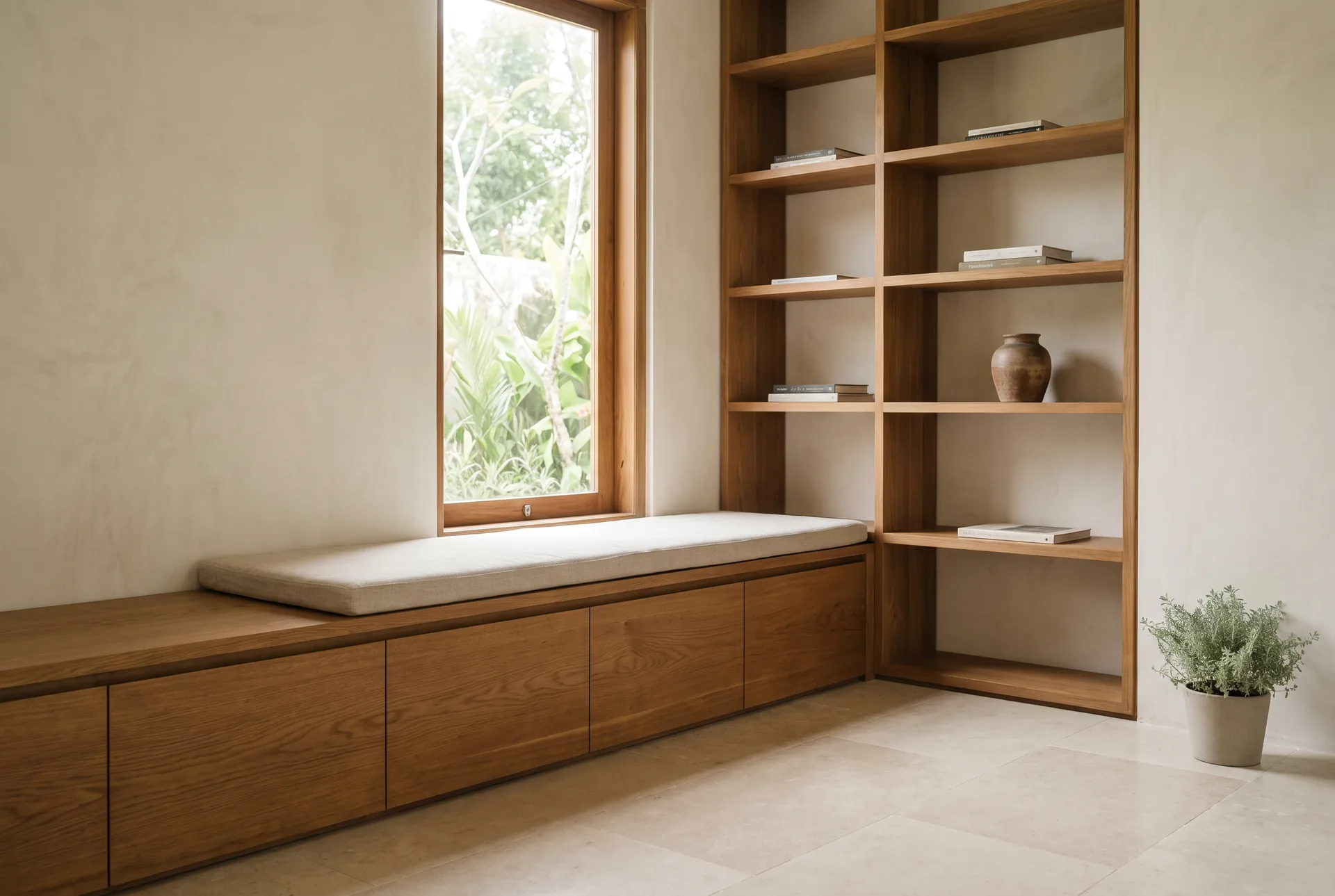
Custom furniture & carpentry
Made-to-measure furniture and woodwork designed and built for your space, from single pieces to full fit-outs.
Explore service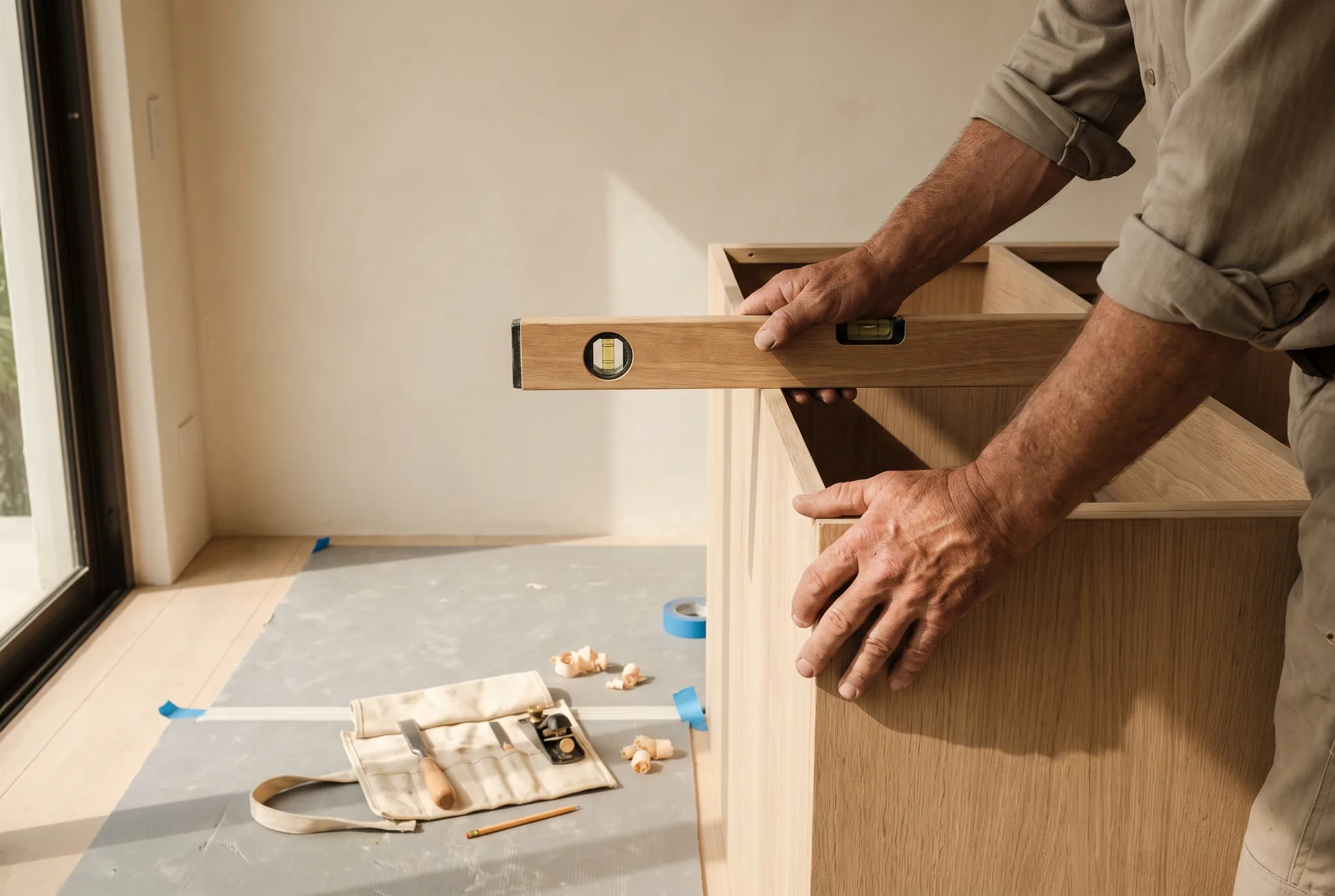
Furniture assembly & installation
Flat-pack and imported furniture assembled, levelled, and anchored safely — beds, wardrobes, desks, and more.
Explore service
Tell us what you need built or installed.
Send a few photos and measurements — we'll get back to you with next steps.