
Planning custom furniture for a Koh Samui villa
Published by Chaingkiat & Furniture — Nearly 30 years of hands-on carpentry, with our own workshop and crew on Koh Samui. · · 5 min read
Furnishing a villa is a long chain of decisions, and furniture is where most of the money — and most of the regret — ends up. Made-to-measure furniture solves problems no catalogue can: rooms that aren't square, storage that has to work through months of high humidity, pieces that must sit against a view rather than a flat wall.
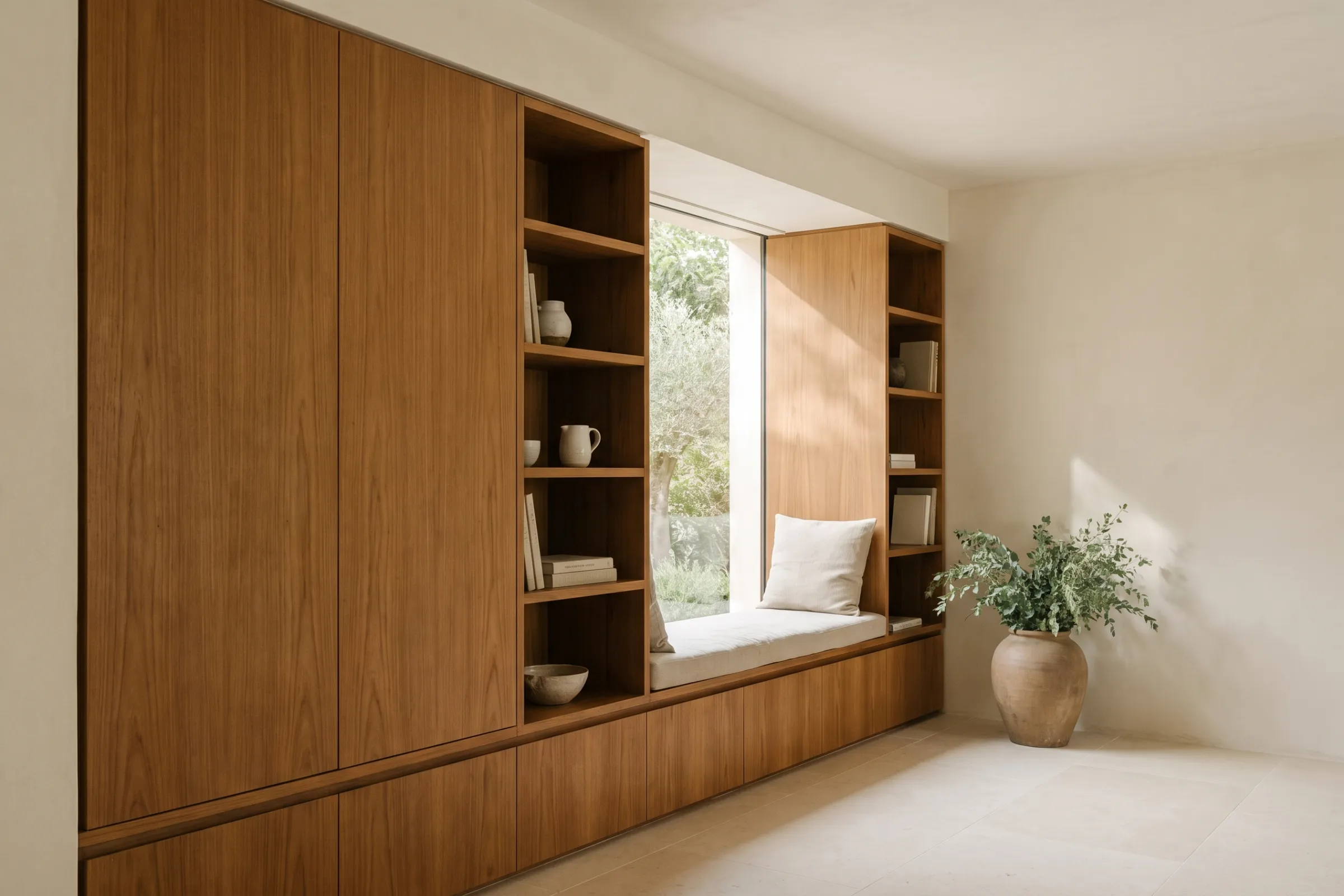
This guide takes the decisions in the order they should be made: what to commission and what to buy, how to measure, how the climate on Koh Samui should shape the spec, and what a proper installation involves. For most villas the first work worth commissioning is fitted storage — built-in wardrobes especially — so storage gets its own section below.
Custom or ready-made? Settle this first
The short version: ready-made is fine for loose, freestanding pieces — dining chairs, side tables, beds that stand on their own feet. Custom earns its cost wherever a piece has to relate to the building: alcoves, wall-to-wall storage, window seats, anything under a sloped ceiling or against an uneven rendered wall.
That's a compressed answer to a bigger question. We've written a full comparison — the full custom-vs-ready-made comparison — covering timelines, quality control and repairability. Decide the split early, because it determines which rooms need a proper survey and which just need a shopping list.
Measure like a fitter, not a shopper
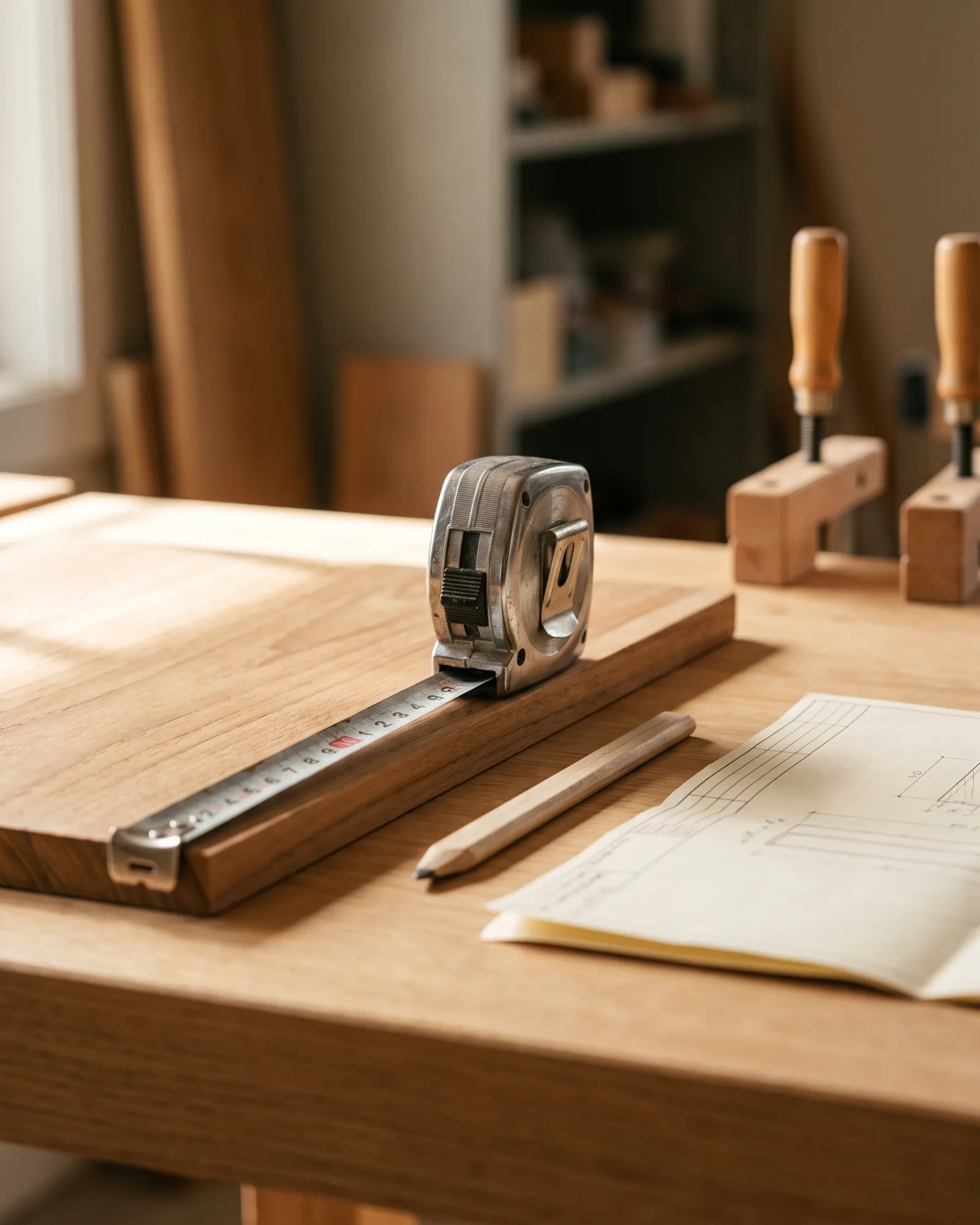
Work in millimetres, never centimetres rounded to the nearest finger. Measure each wall at three heights — floor, waist, head — because rendered concrete walls are rarely plumb, and the difference between top and bottom can be 20mm or more. Take both diagonals of any alcove or room: if they differ, the space is out of square, and a rectangular piece built to the tape's happiest number will not go in.
For anything fitted, the honest advice is: don't measure it yourself at all. When the site survey is inside the workshop's scope, the dimensions become their responsibility rather than yours — ask any maker you talk to whether it is. Your own tape measure is for feasibility and rough budgeting; the maker's site survey is the document the work gets built from.
Decide storage before style
Storage is the least glamorous decision and the one that shapes everything else. Count what the house actually has to hold — linen for guest turnover if it's a rental, luggage, cleaning kit, the paperwork and spares every household accumulates — and give it all a home before choosing a single visible piece. Fitted storage in the dead zones (under stairs, above doorways, the blind side of a bathroom wall) frees the good walls for furniture you want to look at.
Let the villa's layout drive the brief
Villas here are built around air and views: double-height living rooms, glass walls, rooms that open onto terraces. That geometry punishes standard furniture. A 2.4m wardrobe looks marooned under a five-metre ceiling; a sideboard designed for a solid wall blocks half of a glass one. Walk each room and note what the furniture must actually do — divide space without cutting light, turn a corner, sit below a window line — and let those constraints write the brief. A good maker designs from the room's fixed points: sills, aircon units, door swings, the line of the view.
Custom furniture & carpentry
Made-to-measure furniture and woodwork designed and built for your space, from single pieces to full fit-outs.
Explore serviceDesign for the climate, not against it
The island's heat, humidity and salt air are part of the brief, not background. Two mechanisms do most of the damage, and both can be designed for.
How wood actually behaves here
Wood moves across the grain and barely at all along it, and it moves with moisture, not temperature. Coastal air in Thailand sits at roughly 70–90% humidity for much of the year, while air-conditioned rooms cycle cool and dry every night — so a piece is pulled in two moisture directions, week after week. Construction that allows for movement (floating panels, grain run the right way) survives this; construction that fights it cups, splits and jams.
Two details separate work that lasts from work that doesn't. First, sealing: every face and every edge, including the hidden ones — unsealed end grain on a door's top and bottom drinks moisture like a straw, which is why cheap doors swell in the wet months. Second, acclimatisation: timber should rest in, or near, the room it will live in until its moisture content settles, before final machining. Skipping that step is a classic cause of post-installation splits and sticking doors. That is the summary; which timbers and boards actually cope with island humidity is a question with enough depth to earn its own guide.
Hardware and salt air
Near the sea, salt-laden air corrodes fittings long before it troubles the timber. For hinges, runners and handles, 316 marine-grade stainless steel resists chlorides markedly better than standard 304 — worth specifying by number rather than accepting "stainless" as an answer. The same logic covers fixings you'll never see: a corroded screw inside a carcass fails invisibly.
Coordinate the design early
If an architect or interior designer is involved, bring the furniture maker into the conversation while the drawings are still drawings — built-ins affect skirting lines, aircon positions and lighting plans, and changes are cheap on paper. Anything with integrated lighting or an appliance needs its positions agreed with your electrician or plumber before fabrication; the workshop builds around those agreed points rather than doing that work itself. Building from a designer's drawings is entirely normal — but expect the maker to flag anything that still needs deciding before a saw touches wood.
Plan the installation, not just the piece
Delivery on an island has its own logistics. Hillside villas are often reached by steep concrete tracks a large truck can't take, so ask how the pieces will arrive and whether the crew has seen the access — a good installer scouts it before delivery day. Inside, hard floors need protecting, big pieces need a measured route through doors and stair turns, and fitted work should be dry-fitted, scribed to the real walls, and only then fixed. Rain matters more than you'd think: cardboard, chipboard and a sudden downpour are a bad combination, so unpacking happens under cover.
Choosing a workshop on the island
Judge a workshop by its process, not its adjectives. Useful questions: when does the lead-time clock start — at deposit, or at approved drawings? Who measures, and who owns it if the measurements are wrong? What happens if the schedule slips? Are delivery and installation included, and who does the fixing to walls? Ask to see work in progress, not just finished photos — a maker with its own production workshop on the island (ours is in Chaweng) can show you carcasses mid-build, which tells you more than any portfolio.
Finally, expect straight answers about materials. A workshop that tells you what it would not use for your job — and why — is worth more than one that agrees with everything.
Related guides
- Custom furniture & carpentry
A room-by-room furnishing checklist for your Samui villa
A room-by-room checklist for furnishing a Koh Samui villa, entrance to bedrooms: what each space needs, what to build in, and the order to plan it in.Read the guide - Built-in wardrobes & cabinets
Designing a built-in wardrobe for a tropical home
How to plan a built-in wardrobe for a tropical home: ventilation and mould prevention, layouts for awkward spaces, and choices that survive island humidity.Read the guide - Custom furniture & carpentry
Custom vs ready-made furniture: which fits your villa?
Custom or ready-made furniture for a Samui home? How they compare on fit, durability in island humidity, and when a bought piece is the smarter choice.Read the guide
Related services
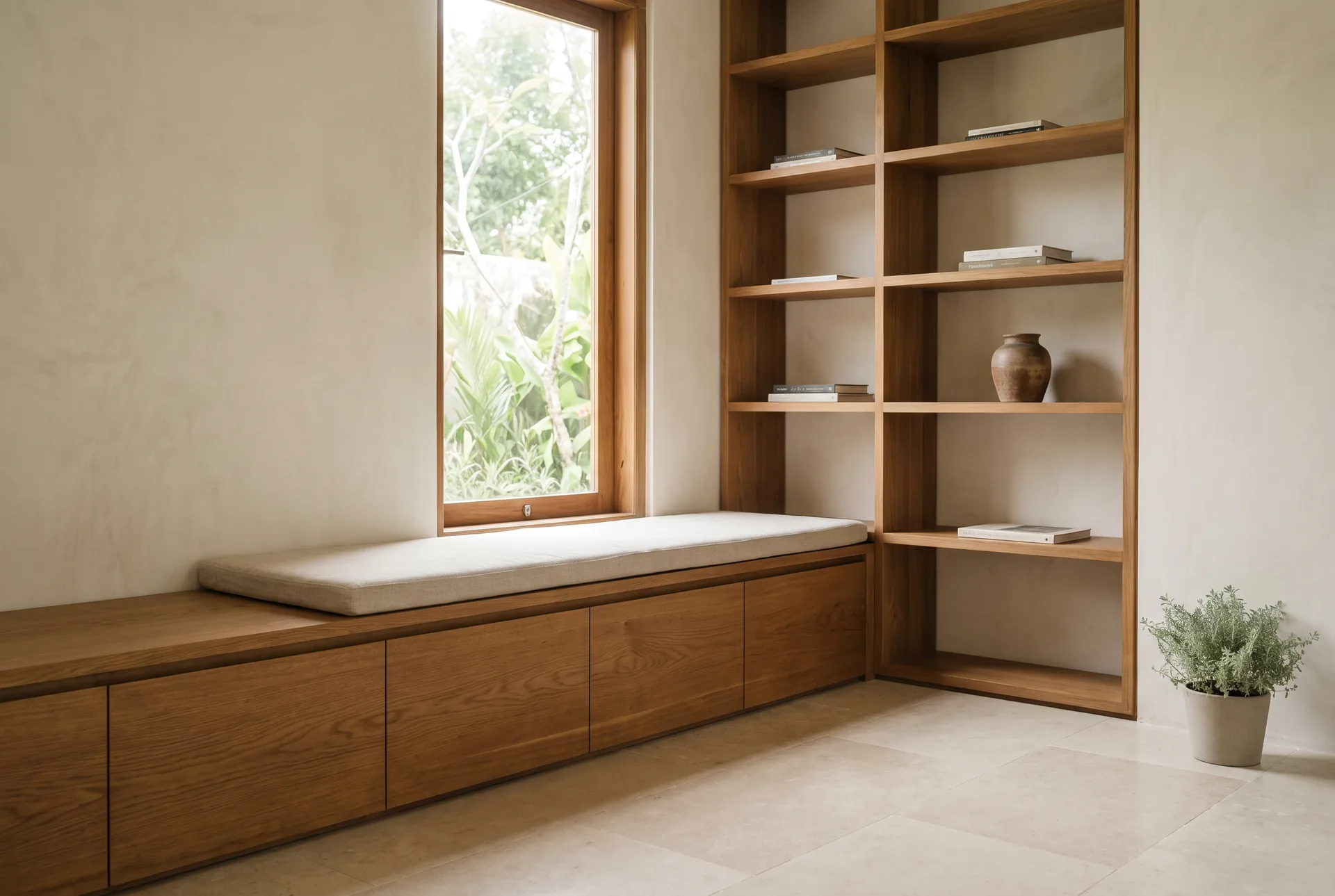
Custom furniture & carpentry
Made-to-measure furniture and woodwork designed and built for your space, from single pieces to full fit-outs.
Explore service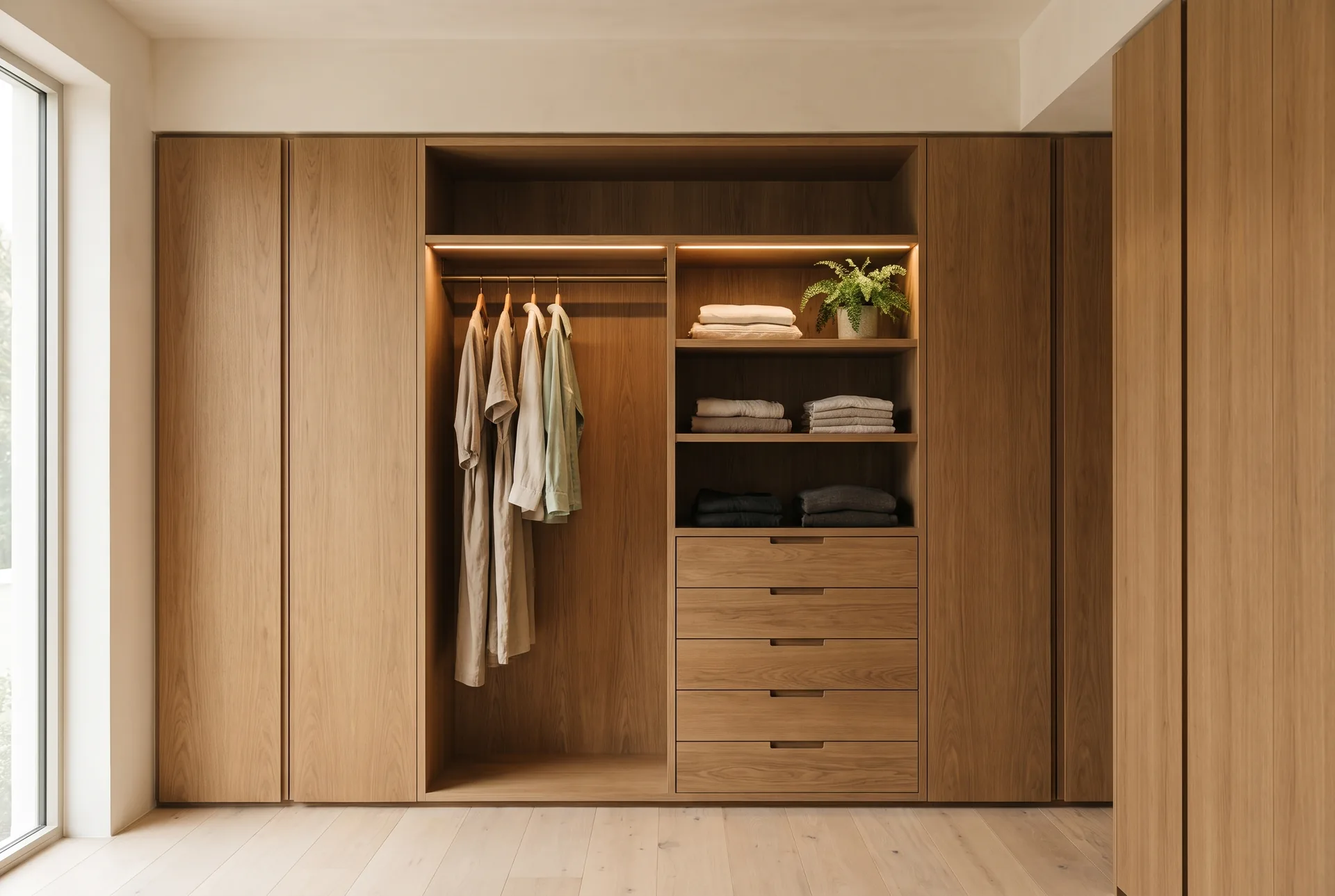
Built-in wardrobes & cabinets
Built-in wardrobes, closets and storage cabinets that use every centimetre — measured, built, and installed.
Explore service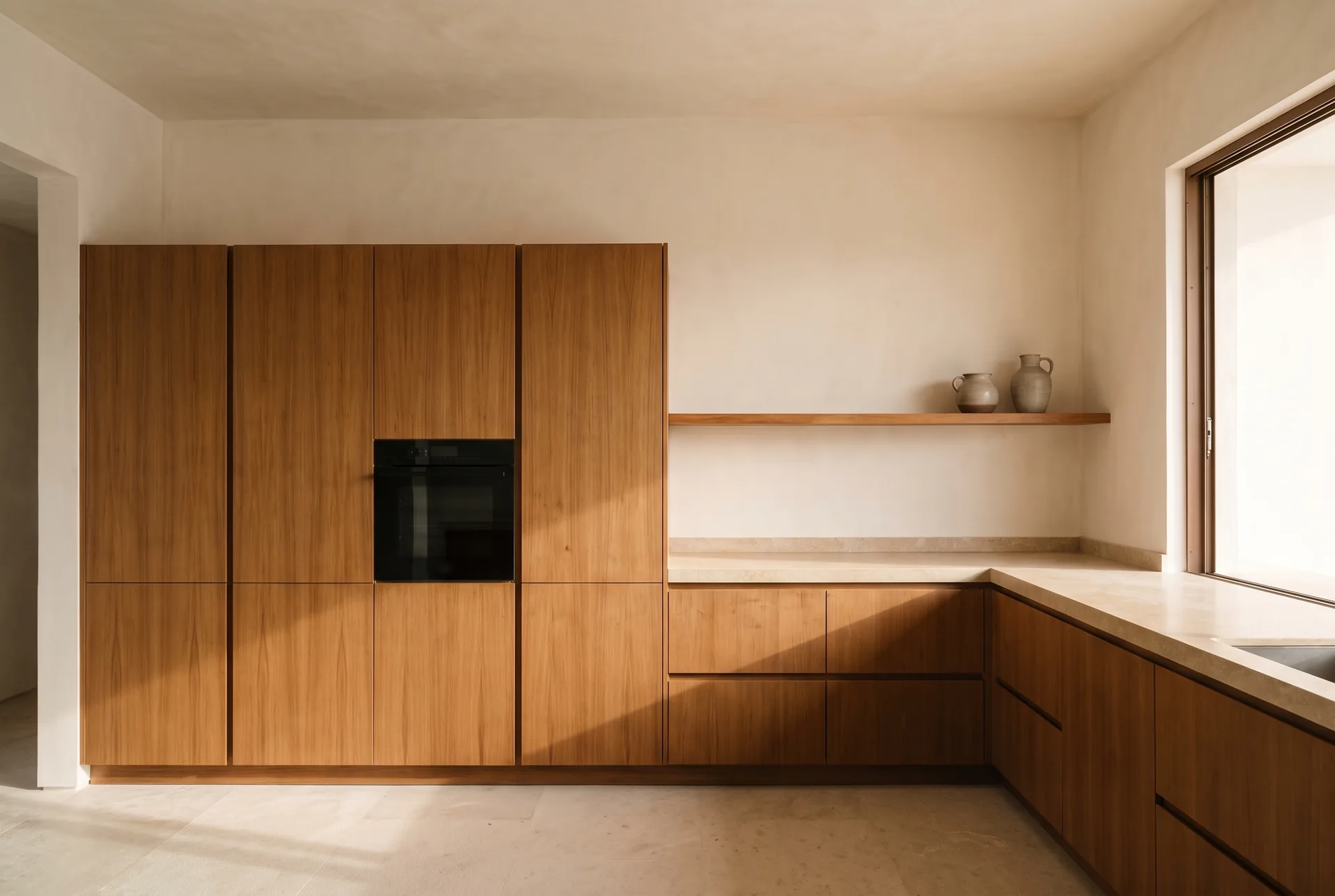
Kitchen assembly & installation
Kitchen cabinets and units assembled and installed — aligned, fixed, and finished ready for daily use.
Explore service
Tell us what you need built or installed.
Send a few photos and measurements — we'll get back to you with next steps.