
How to choose a carpenter on Koh Samui: what to check before hiring
Published by Chaingkiat & Furniture — Nearly 30 years of hands-on carpentry, with our own workshop and crew on Koh Samui. · · 7 min read
Finding a carpenter on Koh Samui is not the hard part — ask in any island Facebook group and you will have ten names by lunchtime. The hard part is choosing between them, because the same word covers a solo fitter with a van of tools and the full spread of work a local carpentry company covers: production, site measurement, installation, decorative woodwork. This guide is a set of checks to run before money changes hands.

One thing to declare up front: this is written by a workshop that does the work for a living. Every check below is deliberately one you can run on anyone — including us — so you end up with a hire you do not regret.
What experience actually tells you
A number of years on its own is a weak signal. Twenty years spent hanging doors is real experience, but it says nothing about whether the same hands can build a kitchen carcass square or spray a cabinet door evenly. What you are actually buying is range: has this carpenter built the kind of thing you are asking for, at that size, recently?
So make the question concrete. Ask what the most similar job was, when it was done, and what went wrong on it — a craftsman with real mileage will usually have an honest answer to the last part. We say this having spent nearly thirty years in the trade: jobs are rarely sunk by lack of skill, and almost always by someone taking on work they had not done before, at a scale they had not managed.
A workshop of their own changes what they can promise
There is a structural difference between a fit-only crew — skilled people who assemble and install what someone else manufactured — and a maker with production behind them. The moment a panel arrives warped, a door is cut wrong, or a layout changes, a crew without a workshop can only reorder and wait; a maker rebuilds the part and comes back.
The test is simple and fair: ask where your piece will physically be built, and ask to see the place. A real production workshop — machines, dust extraction, a spray area, stock — is hard to fake and takes minutes to verify. If your job involves new pieces rather than only fitting, it is worth understanding what commissioning a made-to-order piece involves before comparing candidates, because a maker and a fit-only crew are quoting for different services.
Who measures the room — and who owns the errors
Never let built-in work be quoted from your own measurements. Walls out of plumb, floors out of level, and openings that taper by a centimetre from top to bottom are normal in island construction, and a wardrobe built to a homeowner's tape measure meets all three at once. A serious carpenter inspects and measures the site personally before committing to a price — ours do, and so does every competent outfit.
The measurement question is really a liability question. If the carpenter measured and the piece does not fit, the remake is their cost; if you measured, it is yours. Get that stated plainly before work starts. Anyone who resists visiting the site before quoting a fitted piece is telling you, politely, who will own the mistakes.
Drawings and specifications before work starts
A screenshot from Pinterest plus a verbal agreement is how most disputes are manufactured. Before anything is cut, there should be a drawing you have approved — with dimensions, the internal layout, door and drawer positions — because the drawing is the only version of the job both sides can point at later.
Alongside the drawing, the specification pins down what words like "wood" and "white" actually mean: which board or timber, which hinges and runners, what finish system and sheen. Two quotes for "a built-in wardrobe" can differ entirely in what they intend to deliver, and only a specification exposes it. For a fuller picture of how a well-run interior woodwork job is planned, from first site visit through to installation, we have a separate guide.
Custom furniture & carpentry
Made-to-measure furniture and woodwork designed and built for your space, from single pieces to full fit-outs.
Explore serviceCommunication is a preview of the project
How a carpenter behaves before you hire them is the best preview of how the job will run. The signal to look for is not polish or fluent English — it is whether they repeat your job back with details you never mentioned: which way a door should swing, what the wall behind the unit is made of. Questions are competence made audible.
Be warier of the opposite pattern: an immediate yes to everything, a price offered before anyone has seen the room, no questions at all. That is not confidence. It usually means the thinking you are paying for has been postponed to installation day — the most expensive place to do it.
How a serious quotation reads
Judge a quotation by its structure, not its bottom line. A serious one itemises the work: each piece named with its dimensions, material and finish; delivery and installation stated as included or priced separately; payment tied to stages, not demanded up front. Just as important is what it excludes in writing — electrical work, tiling, removing the old units — because unwritten exclusions are where "extras" come from.
This also means the cheapest number is not automatically the cheapest job. A low figure that silently excludes installation, hardware, or finishing is not a better price; it is an incomplete sentence. Compare quotes only once you are sure they describe the same scope.
Finish quality: where to look up close
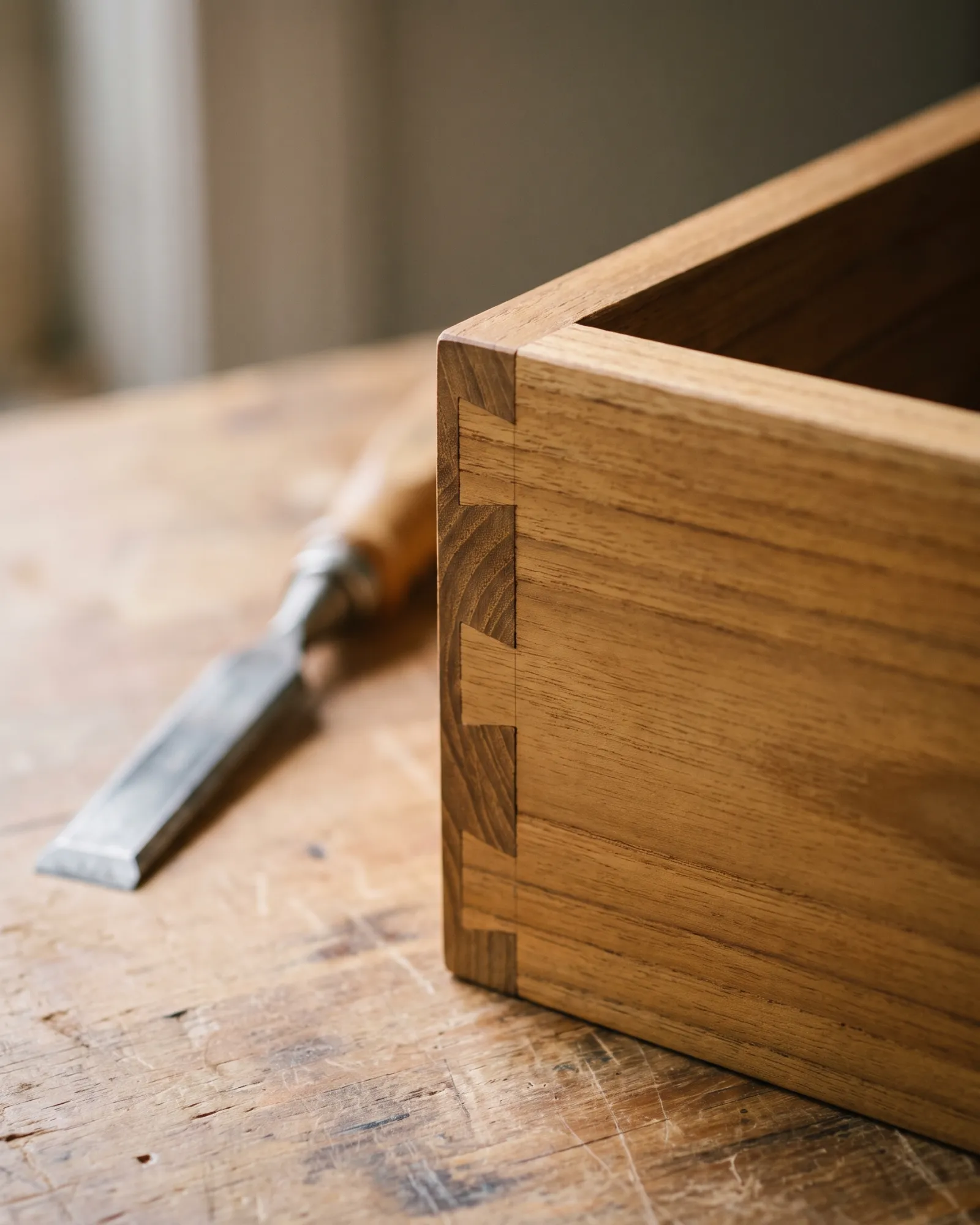
Any workshop's front-of-camera work looks good. Quality lives in the places nobody expected you to inspect: the backs of doors, the undersides of shelves, the insides of drawers. On a piece they show you, run a hand over those surfaces — they should be sealed and smooth; raw board hidden at the back is where humidity gets in first.
Then step back and read the reveals — the gaps around doors and drawer fronts. Even, parallel gaps mean a square carcass and careful fitting; gaps that taper mean the opposite. Open and close things: drawers should run without rocking, doors should meet their frames cleanly. Edges tell the rest — crisp banding, no chip-out, no finish runs collecting at the bottom corners.
Real photos beat showroom shots
A portfolio full of glossy catalogue-style images proves someone can source pictures. What you want to see is a real project, photographed on site — slightly imperfect light, a recognisable room, the same piece from more than one angle. Site photos show the fit against real walls and floors, the part of the craft showroom shots are composed to avoid.
Better still, ask to be shown one installed job, or to speak to one past client with a project like yours. A maker who is proud of work that has been living in someone's house through a few wet seasons will find you an example; evasiveness here outweighs any number of beautiful pictures.
Installation capability and crew size
Making and installing are different skills, and a big job needs both at once. A single villa fit-out can mean wardrobes, a kitchen, doors and ceiling work landing in the same fortnight — more than one pair of hands can install while a workshop keeps producing. For scale, our own crew runs to twenty carpenters — mentioned mostly so you know what a specific answer sounds like. What matters for you is how many people this candidate can put on your site, and for how long.
Ask, too, who exactly turns up. Is installation done by the maker's own people or subcontracted to whoever is free that week? On Koh Samui, where hillside access and rendered-concrete walls complicate every install, a crew that regularly fits its own workshop's output will anchor, level and scribe better than a borrowed one — and gives you one point of responsibility if something needs adjusting later.
The questions to ask before you hire
Condensed, the checklist reads like this. What was your most similar recent job, and can I see it or speak to the client? Where will my piece be built, and can I visit the workshop? Who measures the site, and who pays if a measured piece does not fit? Will I get a drawing and a written specification to approve before cutting starts? What exactly does the quotation include and exclude, and how are payments staged? Who installs, how many of them, and who handles a problem six months later?
None of these questions is aggressive, and none requires expertise to ask. A good carpenter answers them easily, because the answers are simply how organised work is done. Put the same questions to everyone on your shortlist, us included, and the differences will do the choosing for you.
Related guides
- Custom furniture & carpentry
Planning custom furniture for a Koh Samui villa
What to decide before commissioning custom furniture for a Koh Samui villa: materials for island humidity, measuring, and how the build and installation work.Read the guide - Wooden ceilings & architectural woodwork
Planning interior woodwork: from measurements to installation
The sequence behind villa interior woodwork: survey and measurements, deciding the built-in elements, lighting, trade coordination, production, installation.Read the guide - Custom furniture & carpentry
Custom vs ready-made furniture: which fits your villa?
Custom or ready-made furniture for a Samui home? How they compare on fit, durability in island humidity, and when a bought piece is the smarter choice.Read the guide
Related services
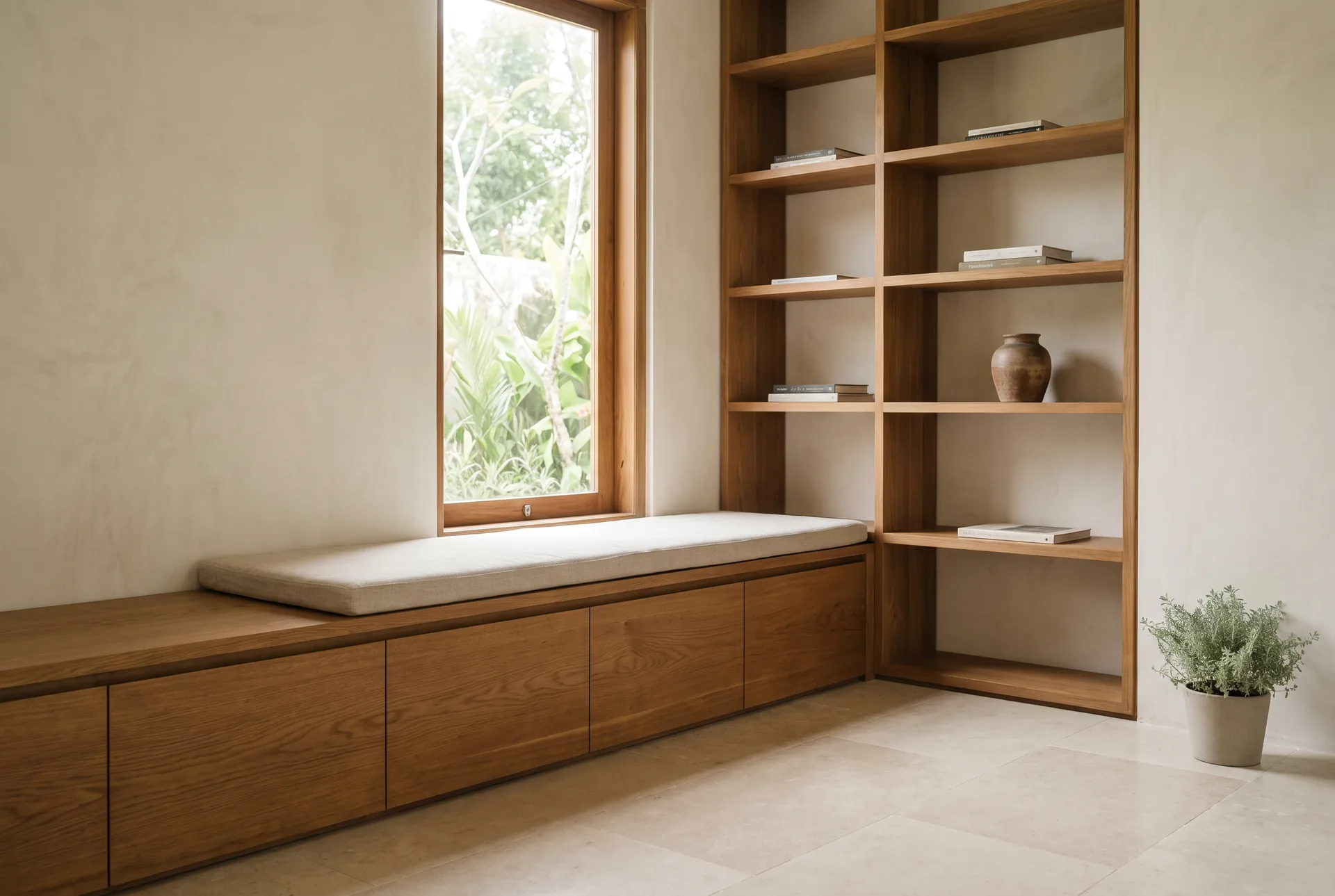
Custom furniture & carpentry
Made-to-measure furniture and woodwork designed and built for your space, from single pieces to full fit-outs.
Explore service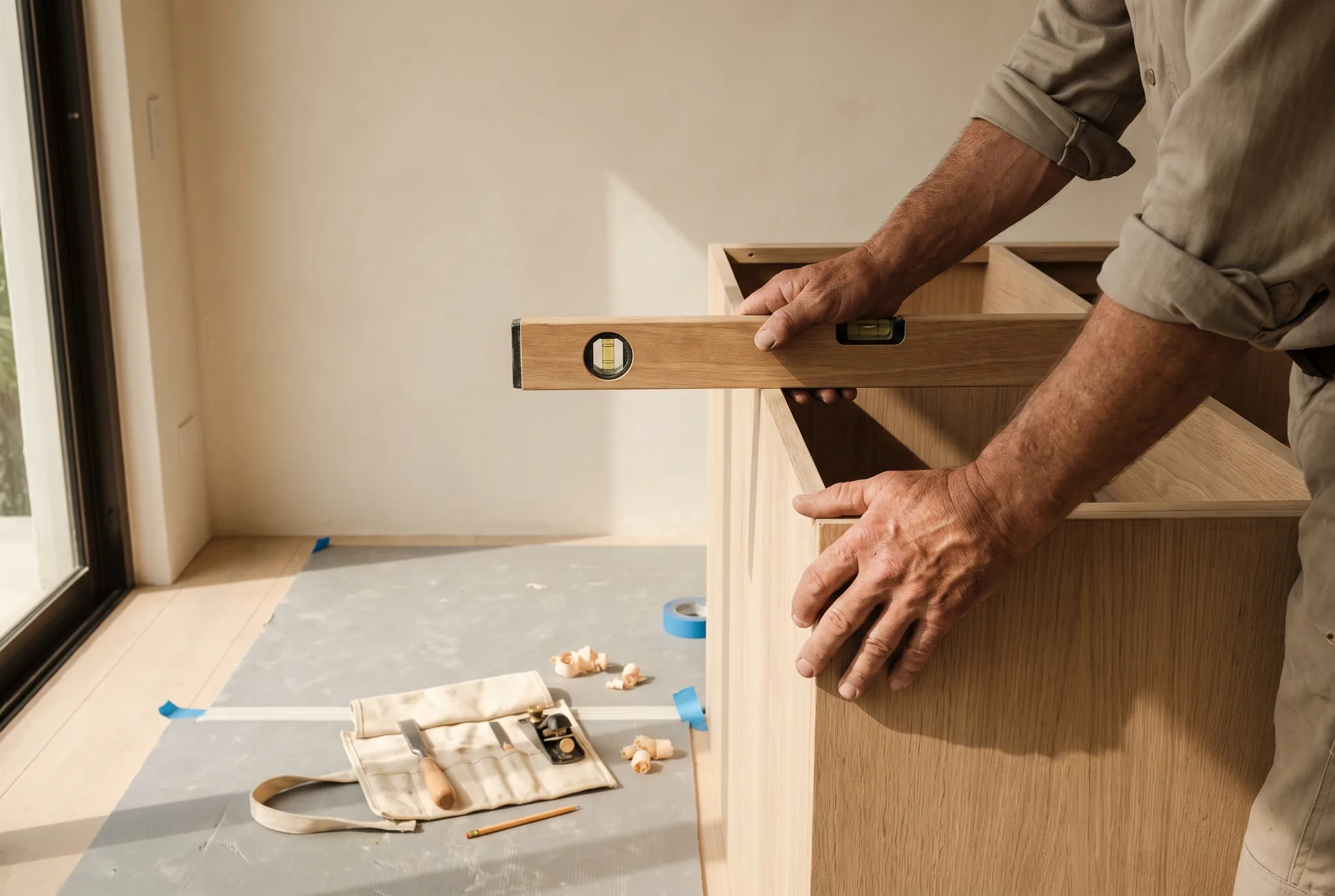
Furniture assembly & installation
Flat-pack and imported furniture assembled, levelled, and anchored safely — beds, wardrobes, desks, and more.
Explore service
Tell us what you need built or installed.
Send a few photos and measurements — we'll get back to you with next steps.