
Getting furniture assembled on Koh Samui: a practical guide
Published by Chaingkiat & Furniture — Nearly 30 years of hands-on carpentry, with our own workshop and crew on Koh Samui. · · 5 min read
Most of what goes wrong with delivered furniture is decided before anyone picks up a screwdriver: the truck that cannot make the last hill, the box signed for with a cracked panel inside, the wardrobe fixed with a wall plug meant for plasterboard. This guide walks through delivery day the way a professional assembly crew plans it — so you can prepare properly, or judge the crew you hire.
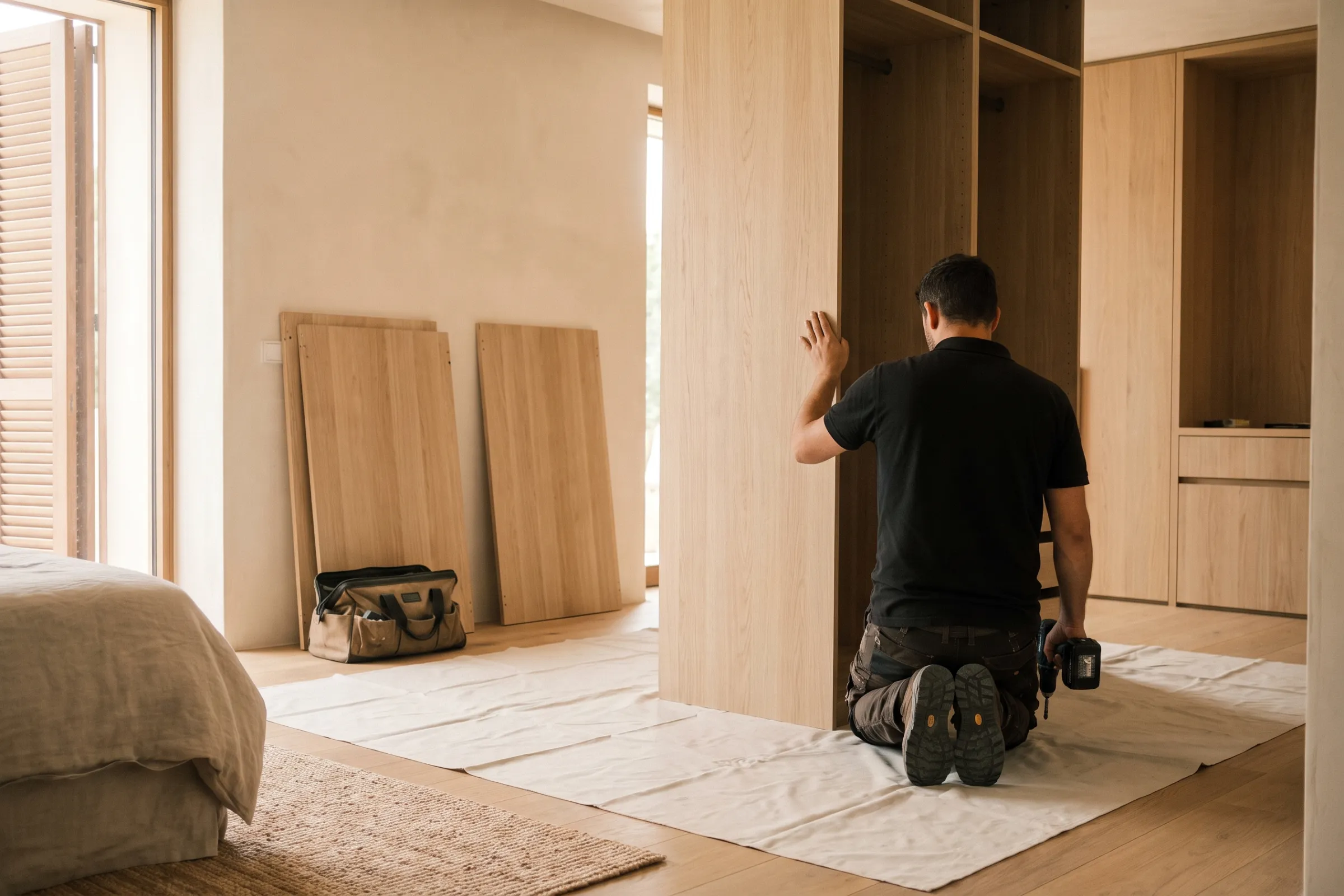
The advice applies whether your furniture is flat-pack from a Thai retailer, a showroom order from Bangkok, or an import that spent weeks at sea. On this island all three share the same last mile, and the last mile is where things break.
Flat-pack, showroom, or imported — know what is in the boxes
Flat-pack from the big Thai retailers arrives as chipboard panels, cam fittings, and a manual. It is engineered to be assembled once, in the right order, and it forgives very little forcing. Delivery to the island is routine; assembly is usually a separate arrangement, so decide who does it before the boxes arrive.
Showroom pieces from Bangkok tend to come part-assembled and heavy. A solid-wood bed frame or a stone-top table needs two or three people and a clear route more than it needs tools. One category sits outside this guide entirely: kitchen units need their own installation process — sequencing, levelling and worktops make them a different job.
Imported furniture carries a different risk: there is no local service network behind it. A missing bracket or a damaged door is not a store run — it is a replacement shipment measured in weeks. That changes how carefully you check the delivery, which is covered below. If you are still deciding what to buy in the first place, our comparison of custom versus ready-made furniture covers where each option earns its keep.
The island leg: how furniture actually reaches a villa
Between a mainland warehouse and your bedroom there are more hand-offs than most buyers picture: warehouse truck, vehicle ferry, island depot or courier, and finally your own access road. Every hand-off is another chance for a box to be dropped, stacked badly, or left in the rain.
The access road deserves the most thought. Plenty of hillside villas are reached by steep concrete tracks with tight turns, and a six-wheel truck may not make the final approach — at which point furniture gets transferred to a pickup or carried by hand. A good delivery or assembly team asks about access before quoting: send photos of the road, the gate, and any stairs, and measure door and stair openings against the largest box on the consignment.
Plan for rain even in the drier months. Cardboard and chipboard tolerate exactly none of it, so agree a covered spot where boxes can be staged and opened. Carrying cartons through a downpour because nobody thought about staging is how flat-pack dies before assembly starts.
Check the boxes before you sign anything
Responsibility for damage changes hands at every step: the retailer owns it until the freight company takes over, the freight company until the island courier signs, the courier until you do. Once your signature is on the delivery receipt, damage becomes your problem to argue — and with an imported piece, an argument you will usually lose.
So before signing: count the boxes against the consignment note, walk around each one, and photograph anything crushed, punctured, or water-stained. Open a suspect box on the spot if the driver allows it. Write visible damage on the receipt before you sign — a photographed note on the paperwork is worth more than any phone call the next day.
Prepare the room, not just the furniture
Decide final positions before assembly starts. An assembled wardrobe does not go back through a narrow doorway, and dragging a finished piece across the room is how floors get scratched. Clear the route, and clear a working area bigger than the largest panel.
Tiled and polished-concrete floors — the local norm — chip and scratch under dragged cartons and metal fittings. Flatten the shipping boxes and work on top of them, keep a moving blanket or two within reach, and fit felt pads before a piece is stood in place, not after the first scrape.
Furniture assembly & installation
Flat-pack and imported furniture assembled, levelled, and anchored safely — beds, wardrobes, desks, and more.
Explore serviceAssembly order is most of the job
Professional crews all work the same way, and it is worth copying. Inventory every part and fitting against the manual before starting — discovering a missing cam lock at step fourteen is far worse than at step zero. Sort the hardware into trays or bowls; the fittings across a wardrobe look alike and are not.
Then assemble loose: fit panels together hand-tight, stand the carcass, check it is square by measuring both diagonals, and only then bring everything to final torque. The three failures behind most wobbling flat-pack are panels fitted in reverse, hardware forced into misaligned holes, and joints tightened before the carcass was square. A rubber mallet, a hand screwdriver for the final turns, and a second person for anything tall cover the rest.
Anchoring: forget the stud finder
Most furniture manuals and nearly all online advice assume a Western wall — plasterboard over timber studs, find the stud, drive a screw. Most walls here are rendered brick, blockwork, or concrete. There is no stud to find, and the plastic plugs in the box are often meant for a wall you do not have.
The right method is a hammer drill with a masonry bit, and sleeve anchors or concrete screws sized to the fixing. Keep expansion anchors away from block edges, and if a fixing spins in soft render, it needs a longer anchor reaching the sound material behind. If none of that sounds like your toolkit, this is the one step worth handing to someone who owns the drill and the habit.
Anchor everything tall, whoever does the work. Tip-overs of unanchored wardrobes and drawer chests injure enough children worldwide that new storage furniture increasingly ships with an anti-tip kit in the box. In a family home — and doubly in a rental villa hosting other people's children — the anti-tip strap is not optional hardware.
Levelling, and the last ten minutes
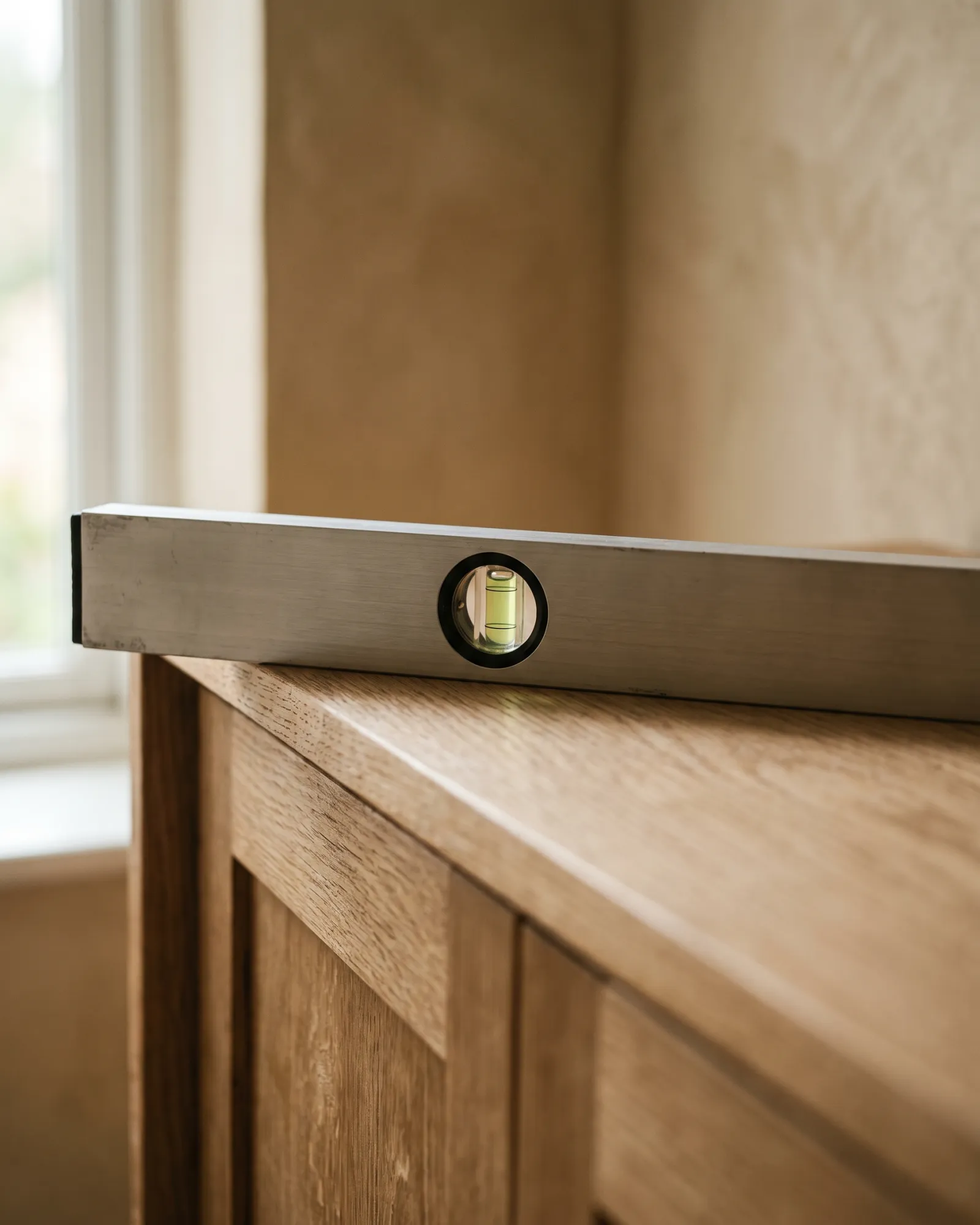
Tiled floors are rarely dead flat, and a cabinet that rocks will work its own joints loose within months. Level every piece using the adjustable feet or discreet packers under the low corner, then check the doors and drawers: even gaps and a clean self-close are the test of a square, level carcass. Nearly thirty years of carpentry has taught us to trust the spirit level over the eye.
Before calling it done: tape the spare fittings and the manual inside or under the piece, break down the packaging, and give every tall anchored piece a firm pull to confirm the fixing holds. Delivery day ends when the room is usable — not when the last screw goes in.
Related guides
- Furniture assembly & installation
Ordering IKEA to Koh Samui: how it gets here, and who builds it
How IKEA orders reach Koh Samui: delivery options from the mainland, what arrives flat-packed, and when it's worth having a local crew assemble and anchor it.Read the guide - Kitchen assembly & installation
Planning a kitchen installation on Koh Samui, step by step
Planning a kitchen installation on Koh Samui: sequencing units, worktops and appliances, levelling on site-built walls, and choosing boards for coastal humidity.Read the guide - Custom furniture & carpentry
Custom vs ready-made furniture: which fits your villa?
Custom or ready-made furniture for a Samui home? How they compare on fit, durability in island humidity, and when a bought piece is the smarter choice.Read the guide
Tell us what you need built or installed.
Send a few photos and measurements — we'll get back to you with next steps.